DepEd Enrollment SY 2024-25: Comprehensive K-12 Enrollment Data Analysis & Key Findings
Explore the detailed analysis of DepEd Enrollment SY 2024-25 results for K-12 education. Review enrollment distribution by level, regional performance, gender parity indices, school sector analysis, SHS track/strand preferences, and historical enrollment trends across the Philippines.
Executive Summary
The Department of Education's enrollment data for School Year 2024-2025 reveals significant patterns and trends across the Philippine K-12 education system. This comprehensive analysis examines enrollment data from 60,129 schools serving 26,400,182 learners nationwide, providing insights critical for educational policy development, resource allocation, and strategic planning.
Key Highlights:
- Total enrollment decreased by 2.52% compared to SY 2023-24, continuing a two-year decline following the post-pandemic peak of SY 2022-23
- The public sector dominates with 85.39% of national enrollment across 79.78% of schools
- Gender Parity Index (GPI) varies significantly across educational levels, with elementary showing moderate male advantage (GPI: 0.928) while Senior High School favors females (GPI: 1.016)
- Region IV-A (CALABARZON) leads in enrollment share (14.67%), followed by Region III (11.02%) and NCR (10.47%)
- Senior High School demonstrates the strongest long-term growth (CAGR: +5.54%) despite recent year-over-year decline
- Technical-Vocational-Livelihood (TVL) remains the most popular SHS strand at 29.31%, followed by HUMSS (27.24%)
Critical Policy Implications:
The sustained enrollment decline in Kindergarten (CAGR: -3.04%) warrants immediate attention for early childhood education policy. Additionally, the highly right-skewed school size distribution (skewness: 5.50) suggests significant inequality in educational infrastructure that may impact service delivery quality.
1. National Enrollment Overview
The Philippines enrolled 26,400,182 learners across all K-12 levels in School Year 2024-25, representing a 2.52% decline from the previous year's 27,081,292. This enrollment figure is distributed across four educational levels with varying proportions that reflect the structural design of the K-12 curriculum.
 Figure 1: Total enrollment by educational level showing distribution across
Kindergarten, Elementary, Junior High, and Senior High School - SY 2024-25
Figure 1: Total enrollment by educational level showing distribution across
Kindergarten, Elementary, Junior High, and Senior High School - SY 2024-25
Table 1.1: National Enrollment by Educational Level (SY 2024-25)
| Level | Total Enrollment | Percentage | Male | Female | GPI |
|---|
| Kindergarten | 1,827,258 | 6.92% | 945,359 | 881,899 | 0.9329 |
| Elementary | 12,921,506 | 48.94% | 6,701,861 | 6,219,645 | 0.9280 |
| Junior High | 7,665,606 | 29.04% | 3,852,631 | 3,812,975 | 0.9897 |
| Senior High | 3,985,812 | 15.10% | 1,977,215 | 2,008,597 | 1.0159 |
| Total | 26,400,182 | 100% | 13,477,066 | 12,923,116 | 0.9589 |
Elementary education accounts for nearly half of all enrollment (48.94%), consistent with the six-year duration of this level compared to four years for Junior High and two years for Senior High. The Kindergarten enrollment at 6.92% represents a single-year cohort, though the figure of 1,827,258 shows notable decline from previous years, warranting attention for early childhood education access.
 Figure 2: National enrollment by grade level showing male and female
distribution from Kindergarten through Grade 12 - SY 2024-25
Figure 2: National enrollment by grade level showing male and female
distribution from Kindergarten through Grade 12 - SY 2024-25
The grade-level progression reveals interesting enrollment patterns. Grade 6 (2,275,353) shows peak enrollment in elementary, while Grade 7 (2,141,724) maintains strong numbers as learners transition to secondary education. A notable observation is the enrollment dip in Grade 8 (1,746,152) compared to surrounding grades, which may reflect retention challenges or late enrollment patterns.
2. Gender Distribution & Parity Analysis
Gender equity in education remains a critical development indicator. The national Gender Parity Index (GPI) of 0.9589 indicates a slight male advantage in overall enrollment, with 13,477,066 male learners compared to 12,923,116 female learners.
 Figure 3: Overall gender distribution showing the proportion of male
(51.05%) and female (48.95%) learners - SY 2024-25
Figure 3: Overall gender distribution showing the proportion of male
(51.05%) and female (48.95%) learners - SY 2024-25
GPI Interpretation Framework:
- GPI = 1.0: Perfect gender parity
- GPI 0.97-1.03: Near parity (acceptable range)
- GPI 0.90-1.10: Moderate disparity
- GPI < 0.90 or > 1.10: Significant gender imbalance
 Figure 4: Gender Parity Index by educational level with reference line at
GPI = 1.0 - SY 2024-25
Figure 4: Gender Parity Index by educational level with reference line at
GPI = 1.0 - SY 2024-25
Table 2.1: Gender Parity Analysis by Educational Level
| Level | Male | Female | GPI | Status |
|---|
| Kindergarten | 945,359 | 881,899 | 0.9329 | Moderate Disparity |
| Elementary | 6,701,861 | 6,219,645 | 0.9280 | Moderate Disparity |
| Junior High | 3,852,631 | 3,812,975 | 0.9897 | Near Parity |
| Senior High | 1,977,215 | 2,008,597 | 1.0159 | Near Parity |
A significant pattern emerges: gender parity improves as educational level increases. Kindergarten and Elementary show moderate male advantage (GPI: 0.93), while Junior High approaches parity (GPI: 0.99). Senior High School actually reverses the pattern with slight female advantage (GPI: 1.02), suggesting that females demonstrate stronger educational retention in secondary education. This phenomenon aligns with global patterns where female educational attainment often exceeds males at higher levels, though the elementary-level disparity warrants policy attention to ensure equal access for girls in early education.
3. School Sector Analysis
The Philippine basic education system operates through four school sectors: Public, Private, State/Local Universities and Colleges (SUC/LUC), and Philippine Schools Overseas (PSO). The public sector maintains overwhelming dominance in both school count and enrollment.
 Figure 5: Distribution of schools by sector showing public sector dominanceSY 2024-25
Table 3.1: School Sector Distribution
| Sector | Schools | % of Schools | Enrollment | % of Enrollment | Avg Size |
|---|
| Public | 47,972 | 79.78% | 22,543,711 | 85.39% | 470 |
| Private | 11,939 | 19.86% | 3,750,251 | 14.21% | 314 |
| SUC/LUC | 183 | 0.30% | 81,365 | 0.31% | 445 |
| PSO | 35 | 0.06% | 24,855 | 0.09% | 710 |
 Figure 6: Total enrollment distribution across school sectors - SY 2024-25
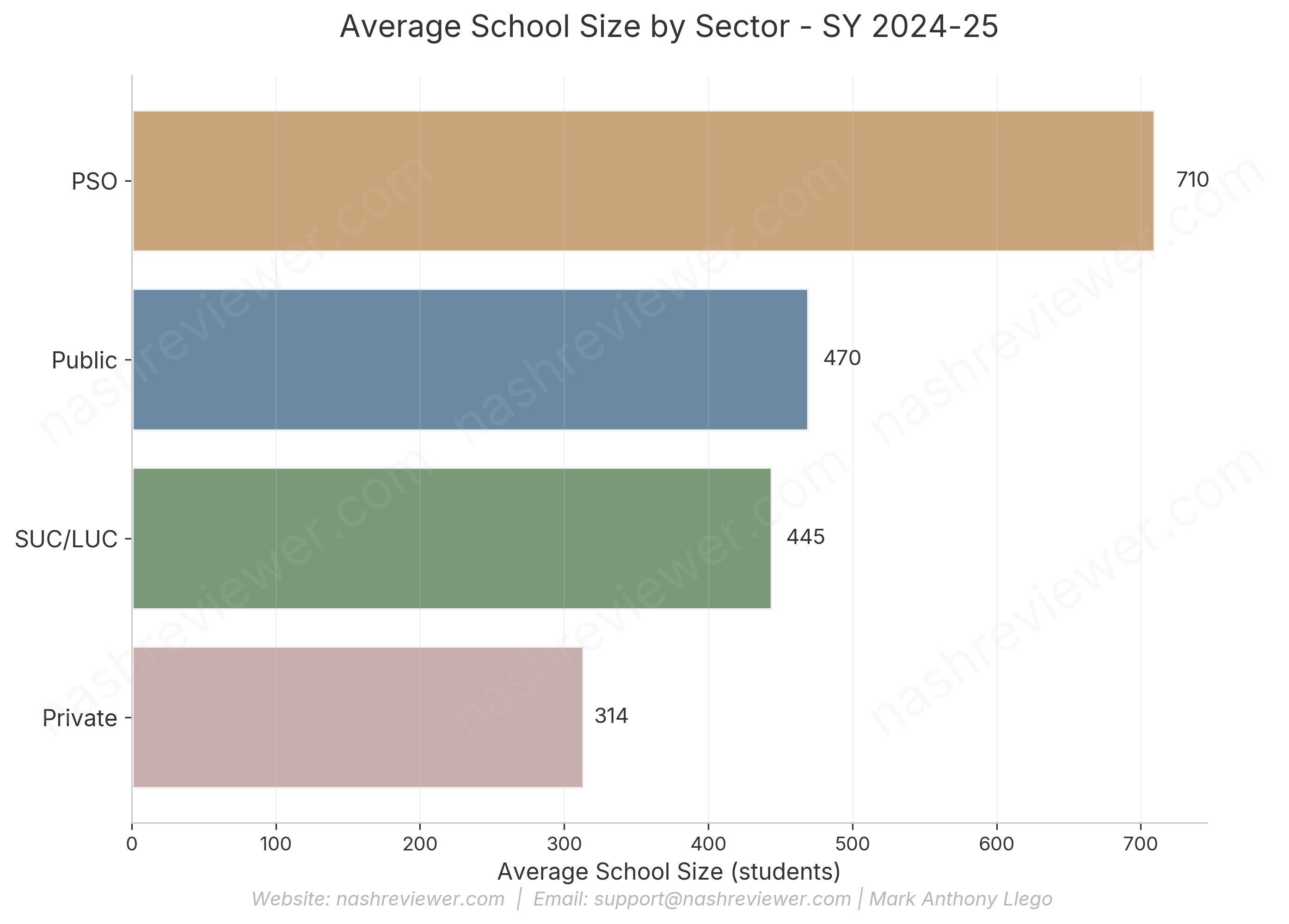 Figure 7: Average school size by sector, with PSO showing highest average
(710) - SY 2024-25
Figure 7: Average school size by sector, with PSO showing highest average
(710) - SY 2024-25
The public sector's share of enrollment (85.39%) exceeds its share of schools (79.78%), indicating that public schools are generally larger on average (470 students) compared to private schools (314 students). This pattern reflects the public sector's mandate to provide universal access, often resulting in higher enrollment densities. Philippine Schools Overseas (PSO) demonstrate the highest average school size (710), reflecting the concentrated Filipino diaspora communities they serve.
4. Regional Enrollment Distribution
Regional analysis reveals significant geographic concentration of enrollment, with three regions (IV-A, III, and NCR) accounting for over one-third of national enrollment. This pattern reflects population distribution and urbanization trends across the archipelago.
 Figure 8: Regional share of national enrollment showing concentration in
CALABARZON, Central Luzon, and NCR - SY 2024-25
Figure 8: Regional share of national enrollment showing concentration in
CALABARZON, Central Luzon, and NCR - SY 2024-25
Table 4.1: Top 10 Regions by Enrollment
| Region | Enrollment | % of National | Schools | Avg Size | GPI |
|---|
| Region IV-A | 3,871,761 | 14.67% | 6,011 | 644 | 0.9499 |
| Region III | 2,908,517 | 11.02% | 5,193 | 560 | 0.9536 |
| NCR | 2,763,471 | 10.47% | 2,541 | 1,088 | 0.9605 |
| Region V | 1,672,003 | 6.33% | 4,481 | 373 | 0.9467 |
| Region VII | 1,660,969 | 6.29% | 3,589 | 463 | 0.9412 |
| Region XI | 1,345,342 | 5.10% | 2,706 | 497 | 0.9653 |
| Region X | 1,303,187 | 4.94% | 3,109 | 419 | 0.9696 |
| NIR | 1,216,279 | 4.61% | 2,732 | 445 | 0.9551 |
| Region I | 1,198,291 | 4.54% | 3,391 | 353 | 0.9419 |
| Region VIII | 1,175,013 | 4.45% | 4,480 | 262 | 0.9536 |
 Figure 9: Average school size by region, with NCR showing highest density
(1,088) - SY 2024-25
Figure 9: Average school size by region, with NCR showing highest density
(1,088) - SY 2024-25
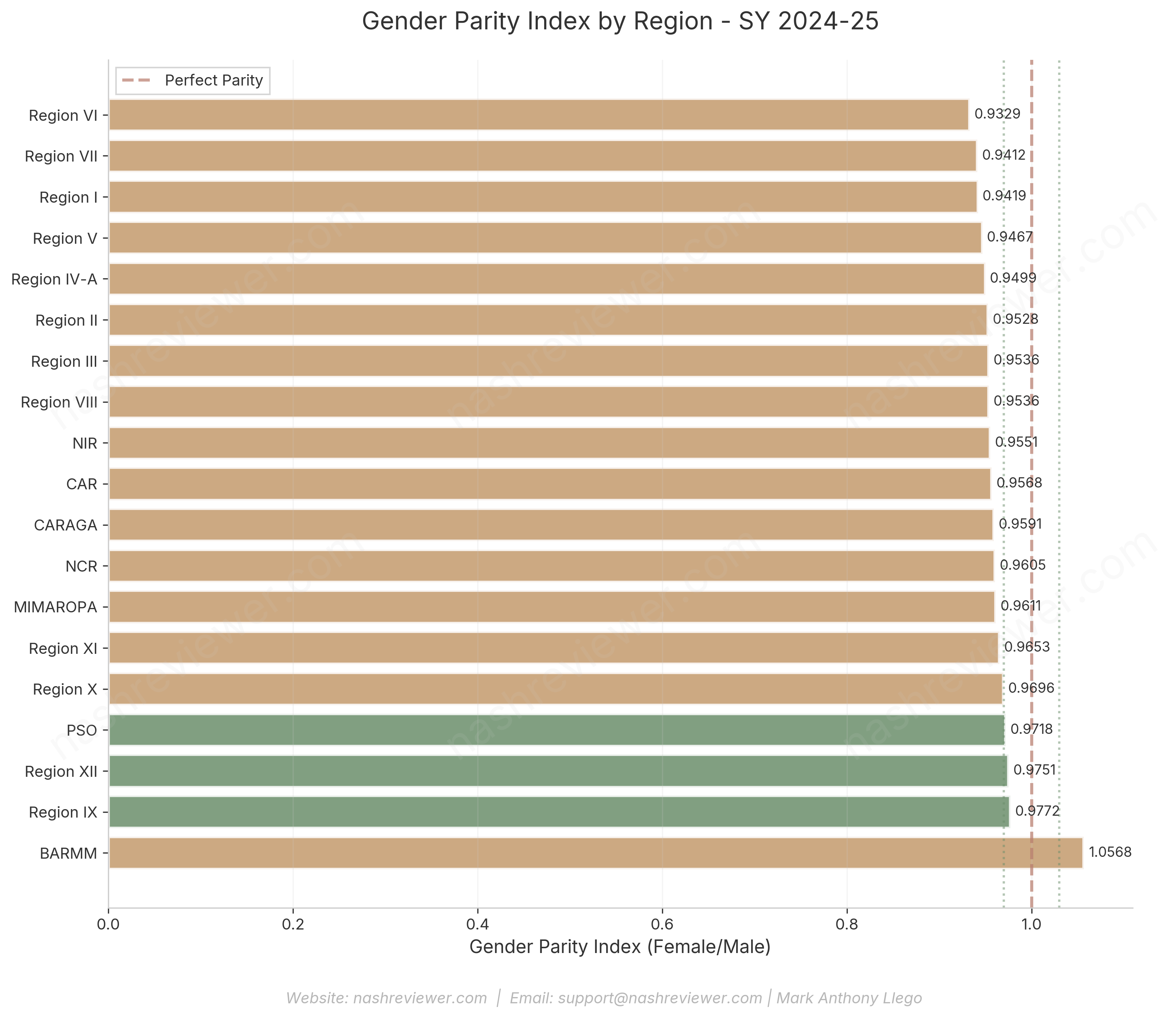 Figure 10: Regional Gender Parity Index comparison with reference line at
GPI = 1.0 - SY 2024-25
Figure 10: Regional Gender Parity Index comparison with reference line at
GPI = 1.0 - SY 2024-25
NCR's dramatically higher average school size (1,088) compared to other regions reflects the urban density and limited land availability in Metro Manila. Conversely, Region VIII (262) and CAR (201) show smaller average sizes due to the prevalence of small, geographically dispersed schools serving rural communities.
 Figure 11: Regional enrollment distribution by level showing percentage
breakdown - SY 2024-25
Figure 11: Regional enrollment distribution by level showing percentage
breakdown - SY 2024-25
BARMM presents a notably different profile with higher Kindergarten (10.6%) and Elementary (57.1%) concentrations but significantly lower Junior High (22.2%) and Senior High (10.0%) shares compared to national averages. This pattern suggests challenges in educational retention beyond elementary level in the Bangsamoro region, presenting an important area for targeted policy intervention.
5. Provincial & Division Analysis
The analysis at the division level provides more granular insights into enrollment distribution. The largest school division (Cebu) serves 609,702 learners, while urban divisions like Manila and Caloocan City show significantly higher school density ratios.
 Figure 18: Top divisions by share of national enrollment - SY 2024-25
 Figure 19: School divisions with highest number of schools - SY 2024-25
Table 5.1: Top 15 Divisions by Enrollment
| Division | Enrollment | % of National | Schools | Avg Size |
|---|
| Cebu | 609,702 | 2.31% | 1,355 | 450 |
| Quezon City | 597,699 | 2.26% | 599 | 998 |
| Rizal | 576,047 | 2.18% | 703 | 819 |
| Bulacan | 562,202 | 2.13% | 797 | 705 |
| Cavite | 496,963 | 1.88% | 622 | 799 |
| Quezon | 476,132 | 1.80% | 1,131 | 421 |
| Camarines Sur | 473,702 | 1.79% | 1,284 | 369 |
| Davao City | 458,410 | 1.74% | 651 | 704 |
| Iloilo | 456,291 | 1.73% | 1,393 | 328 |
| Batangas | 402,244 | 1.52% | 915 | 440 |
| Pampanga | 386,632 | 1.46% | 718 | 538 |
| Manila | 367,119 | 1.39% | 283 | 1,297 |
| Leyte | 366,962 | 1.39% | 1,372 | 267 |
| Nueva Ecija | 362,680 | 1.37% | 896 | 405 |
| Caloocan City | 343,343 | 1.30% | 261 | 1,315 |
 Figure 20: Top provinces by share of national enrollment - SY 2024-25
Urban divisions (Manila: 1,297 average; Caloocan City: 1,315) demonstrate substantially larger school sizes, reflecting the population concentration and limited expansion options in highly urbanized areas. This creates classroom density challenges that may impact educational quality.
6. Municipality-Level Analysis
Municipality-level analysis provides the finest geographic granularity for understanding enrollment distribution and school infrastructure patterns.
 Figure 43: Top 30 municipalities by total enrollment - SY 2024-25
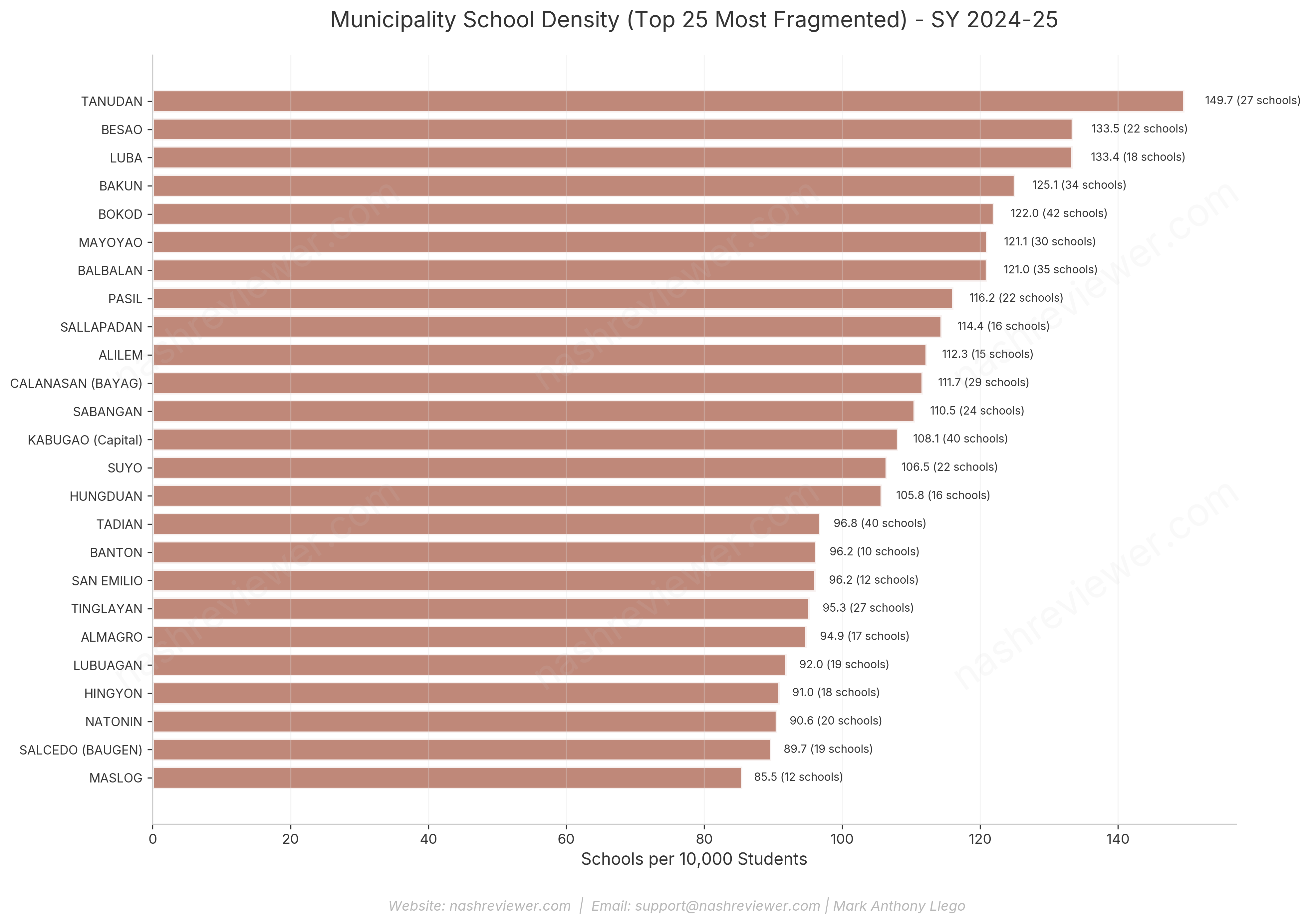 Figure 44: School density analysis showing schools per 10,000 students by
municipality - SY 2024-25
Figure 44: School density analysis showing schools per 10,000 students by
municipality - SY 2024-25
 Figure 45: Average school size distribution across municipalities - SY
2024-25
Figure 45: Average school size distribution across municipalities - SY
2024-25
The school density metric (schools per 10,000 students) serves as a useful proxy for educational access. Municipalities with higher density ratios generally offer better geographic accessibility, though this must be balanced against considerations of school size efficiency and resource allocation optimization.
7. Grade-Level Enrollment Progression
Understanding enrollment patterns across the complete K-12 continuum is essential for identifying retention challenges and transition bottlenecks.
 Figure 23: Complete K-12 enrollment profile from Kindergarten through Grade
12 - SY 2024-25
Figure 23: Complete K-12 enrollment profile from Kindergarten through Grade
12 - SY 2024-25
Table 7.1: Complete K-12 Grade-Level Enrollment
| Grade | Male | Female | Total | GPI |
|---|
| Kindergarten | 945,359 | 881,899 | 1,827,258 | 0.9329 |
| Grade 1 | 1,077,847 | 992,511 | 2,070,358 | 0.9208 |
| Grade 2 | 1,106,395 | 1,024,629 | 2,131,024 | 0.9261 |
| Grade 3 | 1,135,722 | 1,057,309 | 2,193,031 | 0.9310 |
| Grade 4 | 1,115,182 | 1,046,132 | 2,161,314 | 0.9381 |
| Grade 5 | 1,047,613 | 953,273 | 2,000,886 | 0.9099 |
| Grade 6 | 1,159,027 | 1,116,326 | 2,275,353 | 0.9632 |
| Grade 7 | 1,091,064 | 1,050,660 | 2,141,724 | 0.9630 |
| Grade 8 | 887,277 | 858,875 | 1,746,152 | 0.9680 |
| Grade 9 | 931,270 | 936,244 | 1,867,514 | 1.0053 |
| Grade 10 | 939,840 | 965,179 | 1,905,019 | 1.0270 |
| Grade 11 | 1,012,891 | 1,028,710 | 2,041,601 | 1.0156 |
| Grade 12 | 964,324 | 979,887 | 1,944,211 | 1.0161 |
 Figure 21: Elementary school enrollment progression from Kindergarten
through Grade 6 - SY 2024-25
Figure 21: Elementary school enrollment progression from Kindergarten
through Grade 6 - SY 2024-25
 Figure 22: Junior High School enrollment progression from Grade 7 through
Grade 10 - SY 2024-25
Figure 22: Junior High School enrollment progression from Grade 7 through
Grade 10 - SY 2024-25
 Figure 24: Grade-to-grade enrollment transition ratios (2023-24 to 2024-25)SY 2024-25
Table 7.2: Cohort Progression Ratios (SY 2023-24 → 2024-25)
| Transition | Progression Ratio | Status |
|---|
| K→G1 | 101.12% | Normal |
| G1→G2 | 98.60% | Normal |
| G2→G3 | 99.41% | Normal |
| G3→G4 | 98.99% | Normal |
| G4→G5 | 98.59% | Normal |
| G5→G6 | 98.51% | Normal |
| G6→G7 | 98.09% | Normal |
| G7→G8 | 96.57% | Normal |
| G8→G9 | 96.26% | Normal |
| G9→G10 | 95.62% | Normal |
The progression ratios show generally strong retention, though Junior High School exhibits slightly lower ratios (95-97%) compared to Elementary (98-99%). The G9→G10 transition at 95.62% represents the lowest progression rate, suggesting this grade level may benefit from additional retention support interventions.
Note: These progression ratios compare aggregate enrollment counts between school years, not individual student tracking. They provide directional indicators of system-wide retention patterns rather than precise cohort survival rates.
8. Senior High School Track & Strand Analysis
Senior High School (SHS), covering Grades 11-12, offers multiple academic tracks and strands allowing learners to specialize based on interests and career goals. The enrollment distribution across these pathways provides insights into student preferences and potential workforce pipeline development.
 Figure 12: SHS enrollment distribution by track/strand showing TVL and HUMSS
dominance - SY 2024-25
Figure 12: SHS enrollment distribution by track/strand showing TVL and HUMSS
dominance - SY 2024-25
 Figure 13: Total SHS students by track/strand in absolute numbers - SY
2024-25
Figure 13: Total SHS students by track/strand in absolute numbers - SY
2024-25
Table 8.1: SHS Enrollment by Track/Strand
| Strand | Total | Male | Female | GPI | % of SHS |
|---|
| TVL | 1,168,349 | 719,169 | 449,180 | 0.6246 | 29.31% |
| HUMSS | 1,085,575 | 504,583 | 580,992 | 1.1514 | 27.24% |
| STEM | 786,711 | 357,053 | 429,658 | 1.2033 | 19.74% |
| GAS | 500,915 | 242,438 | 258,477 | 1.0662 | 12.57% |
| ABM | 412,369 | 135,708 | 276,661 | 2.0386 | 10.35% |
| Arts & Design | 19,429 | 8,230 | 11,199 | 1.3608 | 0.49% |
| Sports | 7,326 | 5,270 | 2,056 | 0.3901 | 0.18% |
| Maritime | 5,053 | 4,737 | 316 | 0.0667 | 0.13% |
| Unique | 85 | 27 | 58 | 2.1481 | 0.00% |
| Total | 3,985,812 | 1,977,215 | 2,008,597 | 1.0159 | 100% |
 Figure 14: Gender distribution across SHS strands showing distinct patternsSY 2024-25
 Figure 15: Gender Parity Index by SHS track/strand revealing significant
gender segregation - SY 2024-25
Figure 15: Gender Parity Index by SHS track/strand revealing significant
gender segregation - SY 2024-25
Significant Gender Patterns in SHS:
SHS strands exhibit pronounced gender segregation that reflects broader societal patterns and may require policy attention:
- Female-dominated strands: ABM (GPI: 2.04), STEM (GPI: 1.20), HUMSS (GPI: 1.15)
- Male-dominated strands: Maritime (GPI: 0.07), Sports (GPI: 0.39), TVL (GPI: 0.62)
The extremely low female participation in Maritime (GPI: 0.07) reflects the male-dominated maritime industry, while ABM's high female concentration (GPI: 2.04) aligns with traditional gender roles in business administration fields. Notably, STEM shows a slight female advantage (GPI: 1.20), contradicting common perceptions of STEM as male-dominated at the secondary level.
9. School Characteristics Analysis
Beyond sector classification, schools vary in management type, annex status, and curricular offerings. These characteristics impact resource allocation, administrative structure, and educational service delivery.
 Figure 26: Distribution of schools by management type - SY 2024-25
 Figure 27: Average enrollment by school management type - SY 2024-25
 Figure 28: Distribution of schools by annex status (Standalone, Mother,
Annex) - SY 2024-25
Figure 28: Distribution of schools by annex status (Standalone, Mother,
Annex) - SY 2024-25
 Figure 29: Average school size by annex status - SY 2024-25
 Figure 30: Schools categorized by curricular offerings (K-12 Complete, ES
Only, etc.) - SY 2024-25
Figure 30: Schools categorized by curricular offerings (K-12 Complete, ES
Only, etc.) - SY 2024-25
 Figure 31: Average enrollment by curricular offering pattern - SY 2024-25
Schools with complete K-12 offerings (Elementary through Senior High) tend to be larger, reflecting their comprehensive service model. Elementary-only schools remain numerous but smaller on average, serving localized community needs especially in rural and remote areas.
10. School Size Distribution & Outlier Analysis
The distribution of school sizes provides critical insights into the educational infrastructure landscape. Understanding size variation helps inform resource allocation and identify schools requiring specialized support.
Table 10.1: School Size Category Distribution
| Size Category | Schools | % of Schools | Enrollment | Avg Enrollment |
|---|
| Very Small (<100) | 14,360 | 23.88% | 789,395 | 55 |
| Small (100-299) | 23,622 | 39.29% | 4,289,801 | 182 |
| Medium (300-599) | 11,309 | 18.81% | 4,734,660 | 419 |
| Large (600-999) | 4,856 | 8.08% | 3,705,462 | 763 |
| Very Large (1000+) | 5,982 | 9.95% | 12,880,864 | 2,153 |
 Figure 16: School size category distribution showing prevalence of small
schools - SY 2024-25
Figure 16: School size category distribution showing prevalence of small
schools - SY 2024-25
 Figure 17: Enrollment distribution histogram showing right-skewed pattern -
SY 2024-25
Figure 17: Enrollment distribution histogram showing right-skewed pattern -
SY 2024-25
Table 10.2: Statistical Distribution Metrics
| Metric | Value |
|---|
| Mean Enrollment | 439.06 |
| Median Enrollment | 206.00 |
| Mode | 70 |
| Standard Deviation | 755.56 |
| Coefficient of Variation | 172.09% |
| Skewness | 5.4951 |
| Kurtosis | 47.7765 |
| Range | 17,064 |
| IQR | 340 |
The substantial difference between mean (439) and median (206) enrollment, combined with high positive skewness (5.50) and kurtosis (47.78), indicates a highly right-skewed distribution. A small number of very large schools significantly influence the average, while the majority of schools are relatively small.
 Figure 32: Enrollment distribution boxplot showing outliers beyond 1.5×IQR
bounds - SY 2024-25
Figure 32: Enrollment distribution boxplot showing outliers beyond 1.5×IQR
bounds - SY 2024-25
 Figure 33: Enrollment histogram with IQR-based outlier bounds indicated - SY
2024-25
Figure 33: Enrollment histogram with IQR-based outlier bounds indicated - SY
2024-25
Outlier Analysis (IQR Method):
- Lower Bound: -407 (effectively 0)
- Upper Bound: 953
- Schools classified as outliers: 6,297 (10.47%)
- Largest school enrollment: 17,064
- Smallest school enrollment: 0
 Figure 34: Outlier rate by school sector - SY 2024-25
 Figure 35: Top 10 largest schools by enrollment - SY 2024-25
 Figure 36: Schools with lowest non-zero enrollment - SY 2024-25
11. Time Series Analysis & Historical Trends
Longitudinal analysis of enrollment data from SY 2017-18 through 2024-25 reveals important trends in Philippine basic education participation.
 Figure 37: Total enrollment trend from SY 2017-18 to 2024-25 showing
pandemic impact and recovery - SY 2024-25
Figure 37: Total enrollment trend from SY 2017-18 to 2024-25 showing
pandemic impact and recovery - SY 2024-25
Table 11.1: Historical Enrollment Summary
| School Year | Total Enrollment | YoY Change | Schools |
|---|
| 2017-18 | 26,311,949 | - | 61,563 |
| 2018-19 | 27,018,509 | +2.69% | 61,916 |
| 2019-20 | 27,030,391 | +0.04% | 61,923 |
| 2020-21 | 26,227,022 | -2.97% | 60,957 |
| 2021-22 | 27,560,661 | +5.08% | 60,429 |
| 2022-23 | 27,794,282 | +0.85% | 60,137 |
| 2023-24 | 27,081,292 | -2.57% | 60,167 |
| 2024-25 | 26,400,182 | -2.52% | 60,129 |
 Figure 38: Enrollment trends by educational level showing divergent patternsSY 2024-25
 Figure 39: Year-over-year growth rate by educational level - SY 2024-25
 Figure 40: Compound Annual Growth Rate (CAGR) by educational level from
2017-18 to 2024-25 - SY 2024-25
Figure 40: Compound Annual Growth Rate (CAGR) by educational level from
2017-18 to 2024-25 - SY 2024-25
Table 11.2: Compound Annual Growth Rate (2017-18 to 2024-25)
| Level | CAGR | Start Value | End Value | Net Change |
|---|
| Total | +0.05% | 26,311,949 | 26,400,182 | +88,233 |
| Kindergarten | -3.04% | 2,268,455 | 1,827,258 | -441,197 |
| Elementary | -0.61% | 13,483,620 | 12,921,506 | -562,114 |
| Junior High | -0.30% | 7,826,414 | 7,665,606 | -160,808 |
| Senior High | +5.54% | 2,733,460 | 3,985,812 | +1,252,352 |
Critical Finding: Senior High School is the only level showing positive CAGR (+5.54%), while Kindergarten exhibits the steepest decline (-3.04%). This divergence reflects both demographic shifts and the relative maturity of the SHS program since its 2016 introduction.
 Figure 41: Cohort progression ratios across grade transitions - SY 2024-25
 Figure 42: Student leakage analysis at critical transition points - SY
2024-25
Figure 42: Student leakage analysis at critical transition points - SY
2024-25
12. Sector × Region Cross-Tabulation
The intersection of sector and region provides nuanced understanding of educational access patterns across geographic areas.
 Figure 46: Sector share of enrollment by region heatmap - SY 2024-25
 Figure 47: Sector share of schools by region - SY 2024-25
 Figure 48: Private sector dominance index by region - SY 2024-25
NCR demonstrates the highest private sector presence, reflecting the concentration of private educational institutions in urban areas with higher household income levels. In contrast, regions like BARMM, CAR, and CARAGA show minimal private sector participation, with public schools serving the overwhelming majority of learners.
13. Data Quality & Zero-Enrollment Report
Maintaining data integrity is essential for accurate analysis and policy development. The zero-enrollment report identifies schools flagged in the data system with no recorded students.
 Figure 49: Distribution of zero-enrollment schools by region - SY 2024-25
Schools reporting zero enrollment may indicate data submission issues, newly established schools not yet operational, or schools temporarily closed. These cases require verification to ensure data accuracy and appropriate resource allocation.
14. Concentration Metrics
Enrollment concentration metrics help understand inequality in educational distribution across geographic and administrative units.
Gini Coefficient Interpretation:
- < 0.4: Low inequality
- 0.4-0.6: Moderate inequality
-
0.6: High inequality
Herfindahl-Hirschman Index (HHI) Interpretation:
- < 0.15: Low concentration (competitive)
- 0.15-0.25: Moderate concentration
-
0.25: High concentration
 Figure 50: Gini coefficient of enrollment concentration by region - SY
2024-25
Figure 50: Gini coefficient of enrollment concentration by region - SY
2024-25
 Figure 51: Herfindahl-Hirschman Index by division - SY 2024-25
Higher Gini values indicate greater enrollment inequality within a region, suggesting a few large schools serve disproportionate shares of learners while many smaller schools serve limited populations. This pattern may reflect geographic constraints or historical development patterns requiring attention for equitable resource distribution.
15. Statistical Significance Tests
Statistical tests confirm whether observed differences between groups are significant or could occur by chance.
 Figure 52: Cohen's d effect sizes for enrollment differences between sectorsSY 2024-25
Mann-Whitney U Test: Public vs. Private Enrollment
The Mann-Whitney U test (non-parametric alternative to t-test) compares enrollment distributions between public and private schools. Results indicate statistically significant differences (p < 0.001), confirming that enrollment patterns differ meaningfully between sectors.
Kruskal-Wallis H Test: Enrollment Across All Sectors
This test extends comparison across all four sectors (Public, Private, SUC/LUC, PSO). Significant results (p < 0.001) indicate at least one sector differs substantially from others.
Cohen's d Effect Size Interpretation:
- |d| < 0.2: Negligible
- 0.2 ≤ |d| < 0.5: Small
- 0.5 ≤ |d| < 0.8: Medium
- |d| ≥ 0.8: Large
The Public-Private comparison yields a small-to-medium effect size, indicating practical significance in enrollment differences beyond statistical significance.
16. Philippine Schools Overseas (PSO) Analysis
Philippine Schools Overseas serve Filipino communities abroad, maintaining educational continuity for overseas Filipino families.
 Figure 53: PSO enrollment by country/region - SY 2024-25
Table 16.1: PSO Enrollment by Country
| Country | Enrollment | Schools | Avg Size |
|---|
| United Arab Emirates | 10,310 | 10 | 1,031 |
| Kingdom of Saudi Arabia | 6,046 | 14 | 432 |
| Qatar | 5,631 | 2 | 2,816 |
| Kingdom of Bahrain | 1,042 | 1 | 1,042 |
| State of Kuwait | 1,009 | 2 | 504 |
| Sultanate of Oman | 377 | 1 | 377 |
| Italy | 163 | 2 | 82 |
| Cambodia | 106 | 1 | 106 |
| East Timor | 98 | 1 | 98 |
| Greece | 73 | 1 | 73 |
 Figure 54: PSO enrollment distribution by educational level - SY 2024-25
 Figure 55: PSO compared to domestic average enrollment - SY 2024-25
 Figure 56: PSO compared to domestic Gender Parity Index - SY 2024-25
The Middle East hosts the majority of PSO enrollment, reflecting the concentration of Overseas Filipino Workers (OFWs) in Gulf Cooperation Council countries. PSO schools show higher average size (710) compared to domestic schools (439), driven by concentrated Filipino populations in specific overseas locations.
17. Cluster Analysis
K-Means cluster analysis (k=5) groups schools based on enrollment characteristics, revealing distinct institutional profiles.
 Figure 57: School cluster analysis scatter plot - SY 2024-25
Table 17.1: Cluster Summary Statistics
| Cluster | Schools | Total Enrollment | Avg Enrollment | Median |
|---|
| Cluster 0 | 51,678 | 11,580,309 | 224 | 171 |
| Cluster 1 | 495 | 2,643,232 | 5,340 | 4,702 |
| Cluster 2 | 610 | 2,220,515 | 3,640 | 3,204 |
| Cluster 3 | 3,101 | 5,179,847 | 1,670 | 1,480 |
| Cluster 4 | 4,245 | 4,776,279 | 1,125 | 996 |
 Figure 58: Cluster composition by sector - SY 2024-25
 Figure 59: Educational levels offered by cluster - SY 2024-25
 Figure 60: Enrollment distribution by cluster - SY 2024-25
 Figure 61: Gender Parity Index by cluster - SY 2024-25
Cluster Profiles:
- Cluster 0 (Majority): 51,678 small schools averaging 224 students; predominantly elementary-only public schools
- Cluster 1 (Mega Schools): 495 very large schools (avg: 5,340) typically offering complete K-12 with strong JHS/SHS presence
- Cluster 2 (Large Elementary): 610 large elementary-focused schools averaging 3,640 students
- Cluster 3 (Comprehensive Secondary): 3,101 schools averaging 1,670 students with strong JHS/SHS offerings
- Cluster 4 (Medium Elementary+): 4,245 medium-large schools (avg: 1,125) with complete elementary programs
18. Enrollment Forecasting
Exponential smoothing applied to historical enrollment data generates projections for the coming school years.
 Figure 62: Enrollment trend with 3-year exponential smoothing forecast - SY
2024-25
Figure 62: Enrollment trend with 3-year exponential smoothing forecast - SY
2024-25
Table 18.1: Enrollment Forecast (3-Year Projection)
| Year | Enrollment | Type |
|---|
| 2024-25 | 26,400,182 | Historical |
| 2025-26 | 26,884,359 | Forecast |
| 2026-27 | 26,690,688 | Forecast |
| 2027-28 | 26,574,486 | Forecast |
The forecast suggests modest enrollment recovery in SY 2025-26 followed by gradual stabilization. However, these projections carry uncertainty given volatile recent trends and should be interpreted as directional estimates rather than precise predictions.
19. Key Findings & Policy Recommendations
Critical Findings Summary
-
Enrollment Decline: Total enrollment declined 2.52% year-over-year, with consecutive declines since the SY 2022-23 peak. This trend warrants monitoring and investigation into underlying causes.
-
Kindergarten Crisis: The most severe decline occurs in Kindergarten (CAGR: -3.04%), representing over 440,000 fewer learners compared to 2017-18. This has implications for future enrollment pipelines across all levels.
-
Senior High Growth: SHS remains the sole growth area (CAGR: +5.54%), adding over 1.25 million learners since 2017-18, indicating successful program maturation.
-
Gender Patterns:
- Elementary and Kindergarten show moderate male advantage (GPI: 0.93)
- GPI improves progressively through educational levels
- SHS strands exhibit pronounced gender segregation, particularly Maritime (GPI: 0.07) and ABM (GPI: 2.04)
-
Geographic Concentration: Three regions (IV-A, III, NCR) account for 36% of national enrollment, reflecting urbanization patterns requiring differentiated resource strategies.
-
Infrastructure Inequality: High skewness (5.50) in school size distribution indicates substantial inequality in educational infrastructure, with 10.47% of schools classified as statistical outliers.
-
BARMM Educational Gap: The Bangsamoro region shows notably lower secondary education participation (JHS: 22.2%, SHS: 10.0%) compared to national averages, requiring targeted intervention.
Policy Recommendations
Immediate Priorities:
-
Early Childhood Education Initiative: Investigate causes of Kindergarten enrollment decline and implement targeted outreach programs to improve early education participation.
-
Gender Equity Programs: Develop strand-specific interventions to address gender imbalances in SHS, particularly encouraging female participation in TVL, Maritime, and Sports tracks.
-
BARMM Secondary Education Support: Implement specialized programs to improve JHS and SHS retention in BARMM, addressing barriers specific to the Bangsamoro context.
Medium-Term Actions:
-
School Size Optimization: Conduct comprehensive analysis of outlier schools to identify appropriate interventions—whether expansion for overcrowded schools or consolidation for underutilized facilities.
-
Private Sector Engagement: Develop public-private partnership frameworks for regions with limited private educational options, enhancing choice and capacity.
-
Data Quality Enhancement: Implement verification protocols for zero-enrollment schools and ensure accurate reporting across all divisions.
Long-Term Strategic Considerations:
-
Infrastructure Planning: Use cluster analysis findings to develop differentiated infrastructure investment strategies based on school profiles.
-
Demographic Alignment: Align educational planning with PSA population projections to anticipate enrollment shifts driven by demographic changes.
-
Quality-Access Balance: As enrollment stabilizes or declines, shift focus toward educational quality improvements while maintaining access in underserved areas.
20. Appendix: Chart Index
Core Enrollment Charts (Figures 1-25)
School Characteristics (Figures 26-31)
Outlier Detection (Figures 32-36)
Time Series Analysis (Figures 37-42)
Municipality Analysis (Figures 43-45)
Sector × Region (Figures 46-48)
Data Quality & Concentration (Figures 49-52)
PSO Analysis (Figures 53-56)
Cluster Analysis (Figures 57-61)
Forecasting (Figure 62)
Data Sources & Methodology Notes
- Data Source: DepEd Enhanced Basic Education Information System (EBEIS) - Learner Information System (LIS)
- Coverage: 60,129 schools serving 26,400,182 learners (SY 2024-25)
- Historical Data: SY 2017-18 through 2024-25
Technical Notes:
- Non-graded students (ESNG, JHSNG) are included in Elementary and JHS totals respectively
- GPI Calculation: Female enrollment ÷ Male enrollment (1.0 = parity)
- Progression ratios compare aggregate enrollment between school years (not individual student tracking)
- Outlier identification uses IQR method (below Q1 - 1.5×IQR or above Q3 + 1.5×IQR)
- Gini coefficient: 0 = perfect equality, 1 = perfect inequality
- HHI: Herfindahl-Hirschman Index; <0.15 = low concentration, 0.15-0.25 = moderate, >0.25 = high
- Cluster analysis uses K-Means (k=5) on standardized enrollment features
- Forecasting uses simple exponential smoothing (α=0.4)